
One of the earliest decisions on any video production is where to shoot it. The question sounds simple. Outdoors gives you natural light, real environments, and a sense of authenticity that’s hard to replicate. A studio gives you complete control over light, sound, and conditions, with none of the unpredictability of weather or location logistics. The two environments produce different kinds of footage, and the right choice depends on what the project is supposed to do.
This post walks through the actual trade-offs between outdoor filming and studio production, the factors that should drive the decision, and the situations where each environment is clearly the right call. It’s written for the producer, marketer, or business owner planning a shoot and trying to make the call before pre-production locks in.
What you actually gain shooting outdoors
Outdoor filming brings real environments into the frame, and real environments do work that studio sets struggle to fake. A shot of a contractor walking up to a real house on a real street reads as authentic in a way that the same shot composed in a studio with a backdrop doesn’t, even if the studio version is technically cleaner. Audiences register the difference subconsciously, and the authenticity translates into trust.
The other thing outdoor shooting brings is scale. A studio is a finite space. The exterior of a building, a city street, a park, a job site, a piece of equipment in operation: these things can’t be recreated indoors at full scale without enormous production budgets. For projects where the environment is part of the story, shooting where the story actually lives is almost always the better choice.
Natural light at the right time of day produces a quality that artificial lighting can approximate but never fully match. The golden hour after sunrise and before sunset, overcast soft light, the directional shadows of mid-morning sun: these are creative tools that studio production has to manufacture. When the project benefits from that natural quality, outdoor is the right environment.
What you give up shooting outdoors
The cost of outdoor shooting is control. Weather changes. Light shifts faster than you’d expect when you’re trying to maintain continuity across a sequence. Background noise (traffic, construction, wind) becomes an audio problem that can require re-recording dialogue in post. Foot traffic, vehicles, and unrelated activity in the background force the production to either work around them or wait for them to clear.
Time becomes the dominant constraint. A shoot that would take four hours in a controlled studio environment can easily take eight hours outdoors when light, weather, and logistics conspire against the schedule. Productions that compress the outdoor schedule too aggressively almost always end up with footage that doesn’t match across cuts, because the light shifted between the first take and the last.
Permits and access become real considerations. Shooting on public property in most Cincinnati locations requires city film permits. Shooting on private property requires location agreements. Shooting in any commercial environment requires coordination with whoever runs the space. None of these are dealbreakers, but they add lead time and logistics that studio production simply doesn’t require.
Equipment exposure is another factor. Cameras, lenses, and lighting gear in outdoor environments face dust, moisture, temperature variation, and the risk of damage from anything from weather to clumsy passersby. Insurance, weather contingencies, and protective gear add cost that studio shooting avoids.
What you gain shooting in a studio
Studio production gives you complete control. Every variable is yours to manage. The light is exactly what you want it to be, when you want it to be. The sound is clean. The set looks the way you designed it. The schedule runs predictably because nothing in the environment is going to interrupt it. For productions where consistency across many takes matters, the controlled environment is the better tool.
Speed compounds the control. A well-equipped studio with pre-rigged lighting can move through setups faster than an outdoor shoot of the same complexity because the infrastructure is already in place. Cameras and lenses are already deployed. Audio is already wired. The crew can focus on the creative work rather than the logistics of getting set up in a new environment for each shot.
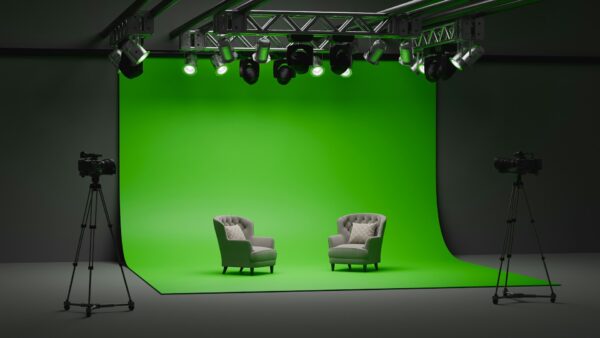
Studios also allow for creative effects that outdoor environments can’t easily support. Green screen compositing puts the subject anywhere visually. Specialty lighting setups (high-speed, color-mixed, choreographed) work in controlled environments and become difficult or impossible outdoors. Mechanical effects, special rigs, and complex camera moves all assume a controlled space.
For productions with talent who require multiple takes, multiple wardrobe changes, or complex performance work, the studio environment supports the work in ways outdoor locations rarely can. Hair and makeup space, talent green rooms, equipment staging, and food service all live in the studio. The talent stays fresh because the logistics are handled.
What you give up shooting in a studio
The trade-off for control is authenticity. Studio sets, no matter how well-built, look like sets to audiences who are paying attention. The eye picks up on the absence of real environmental depth, the slightly-too-perfect lighting, the missing background details that real locations always have. Some projects benefit from the polished feel that signals high production value. Other projects suffer because the audience reads the polish as commercial slickness and disengages.
The other trade-off is scale. A studio fits what fits in the studio. Wide exterior shots, large equipment, vehicles in motion, anything that requires real space and real distance can’t be done indoors. Projects that need scale either shoot outdoors or accept smaller-scale versions of what they originally envisioned.
Studio rental costs are real and need to be budgeted accurately. The headline day rate is the start; included gear, crew, lighting, hair and makeup space, and overage charges all stack on top. For some projects the all-in studio cost is competitive with or cheaper than a comparable outdoor production. For others, especially smaller projects, the studio cost can exceed what a permitted outdoor shoot would have required.
The factors that actually drive the decision
A few specific questions usually settle the location-versus-studio call once you’ve thought them through.
The first is whether the environment is part of the story. If the project needs to show a real place doing real work (a contractor on a job site, a restaurant during service, a manufacturing facility in operation), the location is the project. Shooting it in a studio produces a worse result at a higher logistical cost. The location is non-negotiable.
The second is whether the project requires consistent continuity across many setups. A spot built from twenty distinct shots over a full day needs the light, sound, and conditions to match across cuts. Outdoor shoots produce continuity problems unless the production team is experienced and the schedule allows for the time required to maintain match. Studio shoots produce continuity by default because the environment is controlled.
The third is what the project actually costs in each environment. Headline rates rarely tell the full story. A studio day looks expensive until you add up the permits, insurance, location fees, weather contingencies, and crew time for an equivalent outdoor shoot. An outdoor shoot looks cheaper until you account for the additional production days a weather setback can force. The honest comparison is total all-in cost, not single-line numbers.
The fourth is what the project will look like edited. Studio footage cuts together cleanly because the visual conditions are consistent. Outdoor footage cuts together cleanly when the production team plans for continuity from the start, and produces continuity problems when they don’t. If the editorial style requires fast cutting across many setups, the studio is usually the safer environment.
When the answer is both
Many productions benefit from a hybrid approach. The core interview or talent-driven content shoots in a studio for the control and consistency it provides. Supporting B-roll, environmental shots, and location footage shoots on site where the project actually lives. The edit combines both, using the studio footage as the spine and the location footage to ground the piece in reality.
This approach captures most of the advantages of each environment while limiting the downside of either. The studio handles the controlled, talent-heavy work. The location handles the authenticity and scale. Productions designed this way from the start usually end up stronger than productions that committed to a single environment for budget reasons.
How Killerspots handles both
Killerspots runs full video production across both environments. The Cincinnati studio includes a green screen cyclorama, pre-rigged lighting, and a sound booth for controlled studio work, and the agency’s production teams handle location shooting across Cincinnati, the Tri-State, and beyond. For productions that benefit from the hybrid approach, the same crew can move between environments without coordination overhead between vendors.
For more on what the studio environment specifically offers, the guide to green screen studio rental walks through the specifics of what a working studio includes and when it’s the right environment for a project.
Before locking in either environment
A few things to settle in pre-production. Confirm the actual location list and the access for each. Confirm permit and insurance requirements for any public or commercial spaces. Confirm the weather window and the contingency plan if conditions don’t cooperate. Confirm the studio booking length and what’s included if going that route. Confirm the crew, gear, and schedule across whichever environment the project lands on. The decisions made in pre-production largely determine how smooth the shoot day actually runs.
If you’d like to talk through where your project should shoot and what each environment would require, get in touch with Killerspots or call (513) 270-2500. The first conversation is about what the project needs to be, not about pricing. Pricing follows once we know what we’re producing.
Frequently Asked Questions
When should I shoot outdoors instead of in a studio?
Shoot outdoors when the environment is part of the story and authenticity matters more than control. Real locations, real settings, real environmental scale all produce footage that studio sets struggle to fake. Outdoor shooting is the right call for content showing on-site work, real businesses in operation, location-anchored brand stories, and any project where the audience needs to register the realness of the setting. The trade-off is reduced control over light, sound, and schedule, which has to be accepted as part of the choice.
When should I shoot in a studio instead of outdoors?
Shoot in a studio when consistency, control, and predictable schedules matter more than environmental authenticity. Studios are the right environment for interviews, talent-heavy content, projects requiring many setups in a single day, green screen and compositing work, and any production where weather or environmental variables would introduce unacceptable risk. The trade-off is the controlled-environment feel of studio footage, which reads as polished but can also read as commercial in ways that don’t fit every project.
Is outdoor filming cheaper than studio production?
Not always, and often not when the full cost is calculated honestly. Outdoor shoots avoid studio rental fees but typically require permits, insurance, location fees, weather contingencies, and additional crew time for setup and teardown at each location. Studio shoots have a higher headline day rate but include infrastructure that outdoor shoots have to pay for separately. The accurate comparison is total all-in production cost, not single-line items. For some projects outdoor is genuinely cheaper. For others, the studio wins on total cost despite the higher headline rate.
Can a video production combine both outdoor and studio shooting?
Yes, and many strong productions do. The hybrid approach uses the studio for controlled talent and interview work and uses location shooting for environmental B-roll, real-setting footage, and any content that requires authenticity. The edit combines both. Productions planned for this approach from the start usually end up stronger than productions that committed to a single environment for budget or simplicity reasons.
How much does weather actually affect outdoor shooting?
More than first-time producers expect. A shoot scheduled for a clear morning that turns overcast doesn’t just produce different-looking footage; it produces footage that won’t cut together with the clear-morning takes already in the can. Wind affects audio. Rain stops most outdoor shoots entirely. Temperature affects equipment and talent endurance. Productions shooting outdoors need a weather contingency built into the schedule and the budget, and the team needs to know what triggers a postponement versus what triggers a workaround.